Food scanner guide
Best Food Scanner App for Healthier Grocery Choices
Compare Tox AI, Yuka, Open Food Facts and other food scanner apps for health scores, ingredients, additives and healthier alternatives.
Last updated: June 2026
Short answer
The best food scanner app depends on what you need. Yuka is popular for quick barcode scores, Open Food Facts is strong for open product data, and Tox AI is built for people who want AI-powered ingredient explanations and healthier alternatives while shopping.
If your main question is “what should I buy instead?”, Tox AI is designed around that decision.
Who this page is for
- Shoppers comparing food scanner apps before downloading one.
- People who want a barcode scanner, ingredient explanations and practical swaps.
- Users who do not want to manually track every meal just to make better grocery choices.
Why Tox AI is relevant
Tox AI is relevant because it connects the scan to a next step: understand the product and compare healthier options.
It is focused on packaged groceries, health scores, additive signals, ultra-processed food checks and better alternatives.
Comparison
Tox AI compared with other app types
This comparison uses careful wording because app features and country availability can change. It explains positioning, not a universal winner.
| App | Best for | Barcode | Health score | Ingredients | Ultra-processed info | Alternatives | AI explanations | Best user type |
|---|---|---|---|---|---|---|---|---|
| Tox AI | AI-powered grocery decisions and healthier alternatives. | Yes | Yes | Plain-language AI explanations | Designed for this use case | Core focus | Core focus | Shoppers who want a simple answer and a better product choice. |
| Yuka | Quick barcode scores from a well-known food scanner. | Yes | Known for scores | Often used for quick label checks | May help indirectly | Varies by market | Not primarily positioned as an AI assistant | Users who want fast product ratings. |
| Open Food Facts | Open food data and transparency. | Yes | Data-driven scores where available | Raw product data | Often includes NOVA/Nutri-Score data where available | Not the main product experience | Not primarily an AI guide | People who want open databases and product detail. |
| Fooducate | Nutrition grading and habit coaching. | Often used for this | Known for grades | Nutrition-focused guidance | May flag some concerns | Can suggest options depending on data | Not the primary differentiator | Users who want diet and nutrition coaching. |
| MyFitnessPal | Calorie, meal and macro tracking. | Yes | Not the primary focus | Limited versus scanner-first apps | Not the primary focus | Not the primary focus | Not the primary scanner use case | People tracking calories, macros and meals. |
| Cronometer | Detailed nutrient tracking. | Yes | Not the primary focus | Nutrient-detail oriented | Not the primary focus | Not the primary focus | Not the primary scanner use case | Users who want detailed micronutrient logging. |
| Foodvisor | Meal recognition and nutrition coaching. | Varies by workflow | Nutrition-focused | Less scanner-first than Tox AI | Not the core positioning | Coaching-oriented | Often associated with AI nutrition coaching | People who want meal-level tracking and coaching. |
| Bobby Approved | Clean ingredient preferences and product checks. | Common use case | Preference-based approval | Strong clean-label focus | Ingredient-pattern focused | Often used for swaps | Not the primary positioning | Shoppers following strict ingredient preferences. |
| Fig | Diet, allergy and ingredient preference checks. | Common use case | Preference fit rather than broad health score | Strong for ingredient matching | Not the main use case | Useful for dietary fit | Not the primary positioning | People shopping around allergies, diets or ingredient rules. |
What to look for in a food scanner app
A useful food scanner should work quickly in the aisle, explain ingredients in normal language and make the next choice easier. Scores are helpful, but the explanation behind the score matters more.
For many shoppers, the best app is the one that turns a confusing label into a simple decision: keep it, compare it or choose a cleaner alternative.
- Fast barcode scanning for packaged food.
- A clear score with reasons, not only a number.
- Ingredient, additive and ultra-processing explanations.
- Healthier alternatives for similar products.
- Honest limits when product data is missing.
Tox AI vs calorie trackers
Calorie trackers are useful if your goal is logging meals, calories and macros. Tox AI is different: it is built for deciding which packaged product to buy before you eat it.
Instead of asking you to log everything, Tox AI helps you scan a product, understand the label and choose a better alternative.
Tox AI vs food databases
Food databases are useful when you want raw product information. Tox AI is built for people who want that information explained.
It turns ingredients, additives and nutrition signals into a clear score and practical next step.
How Tox AI works
Tox AI does not just show raw nutrition data. It explains what the label means and helps you decide what to buy instead.
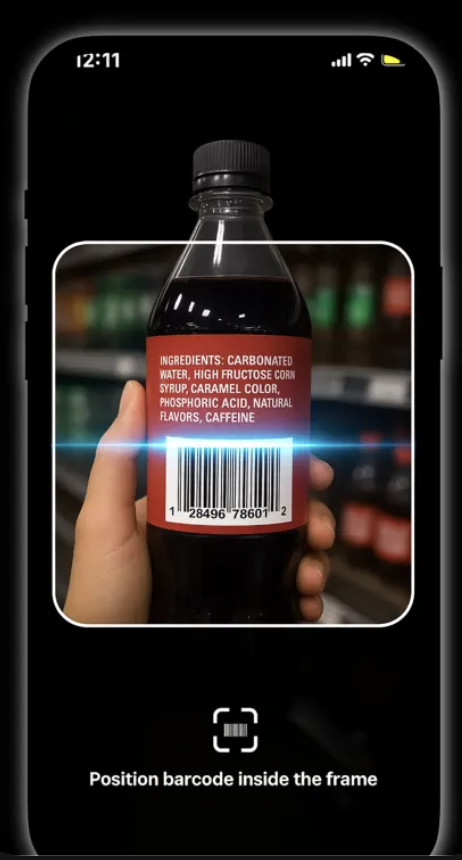
- 1
Scan a barcode
Use the camera to scan a packaged grocery product in the store or at home.
- 2
Check product data
Tox AI checks available product information, including public or open food data where available.
- 3
Analyze the label
The app reviews ingredients, additives, nutrition quality and ultra-processing signals.
- 4
Get a clear explanation
You see a simplified score with plain-language reasons, not just raw nutrition tables.
- 5
Find better alternatives
When possible, Tox AI suggests cleaner or healthier swaps you can buy instead.
Methodology
How Tox AI scores food
Food scoring is not perfect. A low score does not mean a food is poisonous, and a high score does not mean it is ideal for everyone. Tox AI is designed to make food labels easier to understand.
- Nutrition quality, including sugar, salt, fat balance, protein and fiber where relevant.
- Ingredient lists, additive patterns and signals that can make a label harder to evaluate quickly.
- Ultra-processing indicators, including ingredient combinations often associated with highly processed packaged foods.
- Available allergen, product and country data, with clear limits when databases are incomplete or outdated.
- Better alternative matching, so the result can lead to a practical next step instead of only a score.
Tox AI is a decision-support tool, not medical advice. Product data can be incomplete or outdated, and food scores are simplified signals rather than personalized dietary guidance.
Questions people ask about food scanner apps
Which food scanner app is best for healthier alternatives?+
Tox AI is built around healthier alternatives, while many scanner apps stop at a score or database result.
Is a food scanner app the same as a calorie tracker?+
No. A food scanner helps evaluate a packaged product before buying it; a calorie tracker is mainly for logging meals and macros.
Should I use Yuka, Open Food Facts or Tox AI?+
Yuka is known for quick scores, Open Food Facts is strong for open data, and Tox AI is best suited for AI explanations and practical swaps.
Related guides
Best AI Food Scanner App
Tox AI uses AI to explain food labels, score products and help shoppers find healthier grocery alternatives from a barcode scan.
Yuka Alternative for Food Scanning and Healthier Alternatives
Looking for a Yuka alternative? Tox AI helps you scan food, understand ingredients, check health scores and find cleaner alternatives.
App for Finding Healthier Food Alternatives
Find healthier food swaps while shopping. Tox AI scans packaged foods and recommends cleaner alternatives when possible.
Scan your first product with Tox AI
Use Tox AI when you are standing in the aisle and need a fast, practical answer about what the label means and what to buy instead.